The Monthly Letter

The CPP payment date most people get wrong by a week
CPP does not arrive on the first of the month, and December is not like the others. The 2026 dates, and why they move.
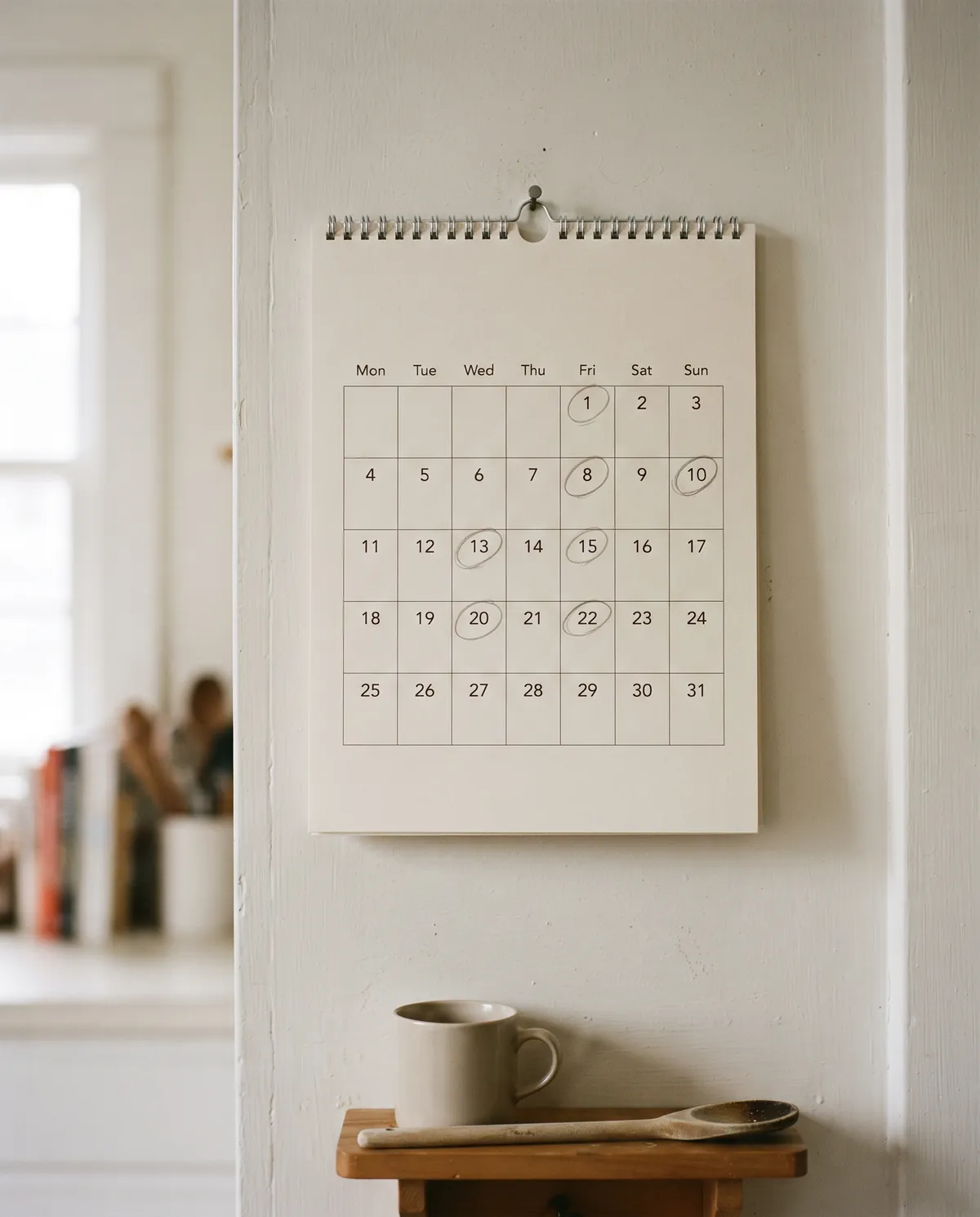
Ask someone when their Canada Pension Plan payment arrives and a surprising number will say “the first”. It is an easy assumption — rent is due then, utility bills are dated then, and plenty of private pensions do pay at the start of the month. CPP does not. It lands at the other end, and in one month of the year it lands more than a week earlier than the pattern would suggest.
That gap between what people expect and what actually happens is the reason some households run a thin week every month without quite knowing why.
It is not the first of the month
CPP retirement pensions, disability benefits, children’s benefits and survivor’s pensions are all paid on the same day each month, and that day sits near the end of the month rather than the beginning. Old Age Security, the Guaranteed Income Supplement and the allowances are paid on the very same dates.
For a household receiving both CPP and OAS, that is worth knowing in its own right: the two payments arrive together, on one date, rather than arriving at two different points in the month. If you have been treating them as two separate instalments spaced apart, the monthly cash-flow picture is less even than you think.
The 2026 dates
Service Canada publishes the dates a year at a time. These are the 2026 payment dates for CPP, and they are the same dates used for Old Age Security.
| Month | Payment date | Month | Payment date |
|---|---|---|---|
| January | Wednesday 28 | July | Wednesday 29 |
| February | Wednesday 25 | August | Thursday 27 |
| March | Friday 27 | September | Friday 25 |
| April | Tuesday 28 | October | Wednesday 28 |
| May | Wednesday 27 | November | Thursday 26 |
| June | Friday 26 | December | Tuesday 22 |
Pinned to a fridge, that table answers most of the questions people phone Service Canada about.
Why the date moves
The date is not fixed to a number. It shifts between the 22nd and the 29th depending on the month, because payments are scheduled onto business days near the month’s end. Weekends and statutory holidays push the date earlier rather than later, which is why it never settles on a single calendar day.
The practical consequence is that the interval between payments is not a tidy thirty days. In 2026 the gap between the September and October payments is 33 days; between November and December it is 26. Anyone budgeting on a strict “payment every four weeks” rhythm will drift away from reality within a couple of months.
 The intervals are uneven
Counted from the published 2026 payment dates. The monthly amount does not change with the length of the gap — only the spacing does.
December is the exception
The December payment is the one that catches people out. In 2026 it falls on 22 December, moved forward so that it clears before the Christmas closures rather than being stranded in them.
That is convenient in December and awkward in January. The money arrives roughly a week earlier than usual, and then the next payment is not until 28 January — a stretch of 37 days between two deposits, over a period that tends to include higher spending. It is the single most predictable cash-flow squeeze in the pension year, and it is also the easiest one to plan around, precisely because the dates are published in advance.
“Issued” is not the same as “arrived”
Service Canada issues payments on the published date. That is not a guarantee that the money is spendable that morning.
With direct deposit, the funds generally appear on the payment date itself, though the exact hour depends on the financial institution. A posted cheque is a different matter: it has to be printed, mailed and delivered, and the government’s own guidance is that mailed payments can take longer to arrive than deposited ones.
If you are still receiving a cheque, signing up for direct deposit removes both the delay and the risk of a payment going astray in the post.
If a payment does not turn up
The official advice is to wait before escalating. Service Canada asks people to allow five to ten business days after the payment date before getting in touch, because most apparent non-payments are ordinary processing or delivery lag.
Before calling, two checks are worth doing:
- Confirm the date. Compare against the published calendar rather than against memory of last month.
- Check the amount, not just the arrival. If a deposit appeared but looks wrong, that is a different problem from a missing payment — and it usually has an ordinary explanation, which we go through in when the deposit doesn’t match the letter.
Your own payment history is visible in My Service Canada Account, which shows CPP payment details for the current year and the two years before it. That record, rather than a bank statement, is the thing to compare against when something looks off.
The useful habit
One printed calendar, kept where the bills get paid, resolves the whole thing. Payments arrive at the end of the month, not the beginning; the date moves within a week-long window; December comes early and January therefore feels long. None of that changes the amount you are owed — but knowing it changes how the month feels.
One email a month: what changed in Canadian pensions and taxes, and what it means in dollars. Free.
Official sources
- Service Canada — Benefits payment dates — the published 2026 CPP and OAS payment dates, and the guidance to wait 5 to 10 business days
- Government of Canada — Receiving your CPP pension — how payments are made, direct deposit and tax deductions
- Government of Canada — CPP information in My Service Canada Account — where to view your own payment history
Candy On Bone is published by SPV Consulting Estonia OÜ and provides general information about Canadian public pensions and taxes. It is not a Government of Canada, Service Canada or Canada Revenue Agency publication and has no affiliation with them. Nothing here is financial, tax or legal advice, and no figure in this article is a promise, quotation or entitlement for any individual reader. Benefit amounts and tax rules depend on personal circumstances and change over time; the figures cited were taken from the official sources listed above on . There is no application, registration or fee on this website for any government benefit. Never give your Social Insurance Number, banking details or government account credentials to a website in response to an article. Use My Service Canada Account or contact Service Canada for anything concerning your own payments.