The Monthly Letter
The renovation credit many Canadians over 65 never claim
Grab bars, a walk-in shower, a ramp at the side door. If you are 65 or older, some of that work has a line on the tax return.
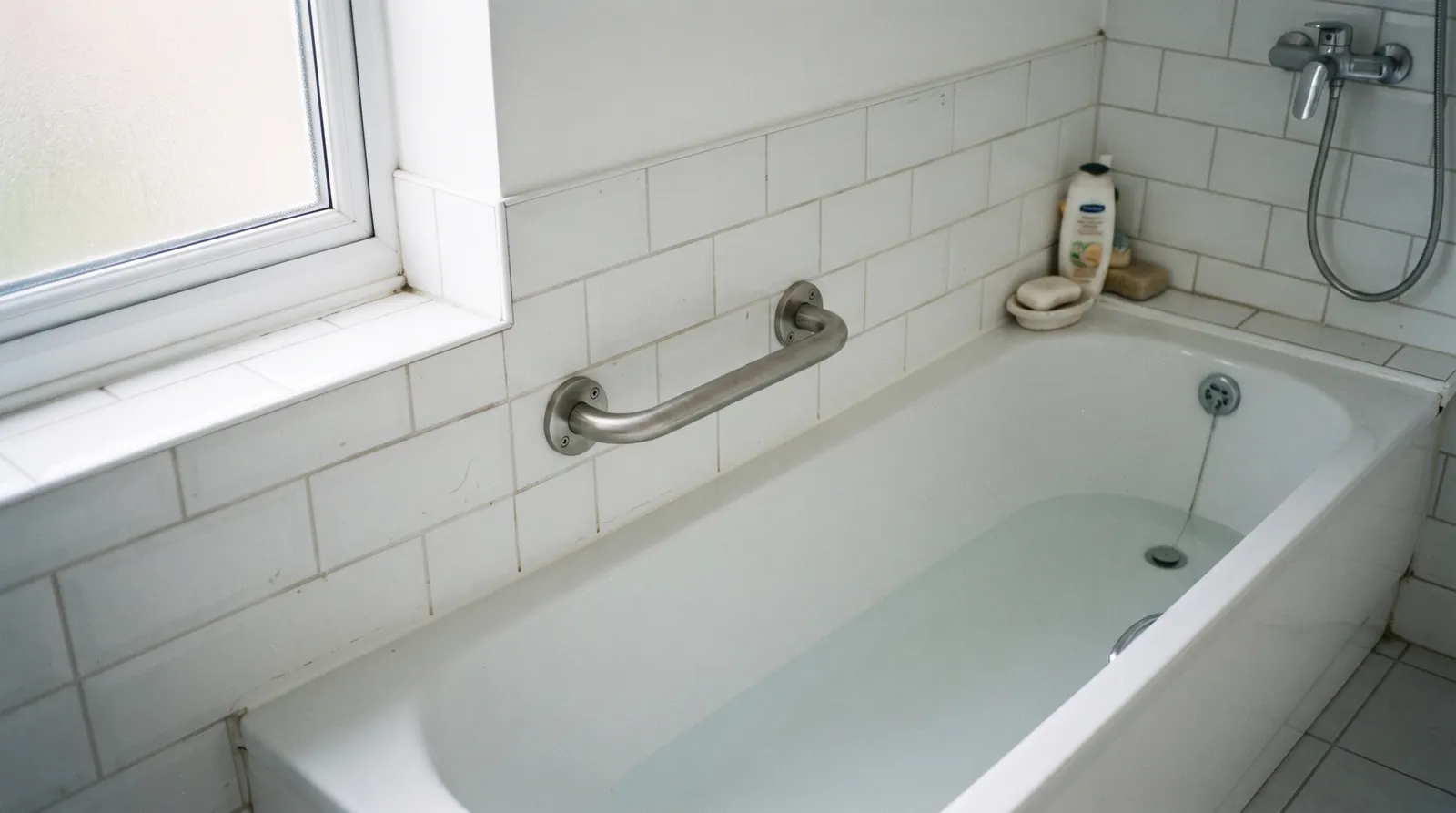
Grab bars beside the bath. A walk-in shower replacing a tub. A ramp at the side door, a handrail on the basement stairs, lever handles instead of round knobs. This is the ordinary, unglamorous work that lets people stay in their own homes for another decade — and a good deal of it has a line on the federal tax return.
The Home Accessibility Tax Credit has existed for years. It is claimed far less often than it could be, largely because nobody involved in the work — not the contractor, not the plumber, not the person paying the invoice — necessarily knows it is there.
What the credit is
The Home Accessibility Tax Credit is a non-refundable tax credit, claimed at line 31285 of the federal return. It is intended to help with the cost of renovations that make a home more accessible or safer.
Being non-refundable matters: the credit reduces tax payable, and it cannot reduce it below zero. A household with no tax to pay cannot get a refund out of it. That is a real limitation for lower-income households, and it is worth knowing before budgeting around the credit rather than after.
Who can claim it
Two roles matter here, and the distinction is what makes the credit broader than most people assume.
A qualifying individual is either:
- someone eligible for the disability tax credit at any time in the year, or
- someone who is 65 or older at the end of the year.
Note the second condition. No disability, certification or medical assessment is required — being 65 by 31 December is sufficient on its own. That is the single most under-appreciated fact about this credit.
An eligible individual is someone who can make the claim on behalf of a qualifying individual. That includes a spouse or common-law partner, and a wide range of relatives: a parent, grandparent, child, grandchild, brother, sister, aunt, uncle, nephew or niece of the qualifying individual or of their spouse or common-law partner, subject to the conditions on the CRA’s page.
So an adult child who pays for a bathroom to be made safe in a parent’s house may be able to claim it — which is a common arrangement and a commonly missed claim.
What work qualifies
A qualifying renovation is one that improves accessibility or reduces the risk of injury in an eligible dwelling, and that is of an enduring nature and integral to the home. The work people most often ask about and which commonly falls within that description includes:
- Grab bars, support rails and handrails.
- Walk-in bathtubs and wheel-in showers.
- Ramps, and widening doorways or passages.
- Lowering counters or cupboards to a reachable height.
- Non-slip flooring.
- Lever-style door handles and taps in place of knobs.
- Improved lighting in stairwells and corridors.
- Stair lifts and similar permanent equipment.
Permitted costs generally extend beyond the fittings themselves to the labour of a professional, building materials, permits, and equipment rental for the job. Whether a specific project qualifies is a question for the CRA’s own page or a tax preparer — the list above indicates the kind of work, not a guarantee about yours.
How much, and the limit
A qualifying individual can claim up to $20,000 per year in eligible expenses. Two ceiling rules go with it:
- Where a qualifying individual has more than one eligible dwelling in a year, the total across all of them cannot exceed $20,000.
- Where there is more than one qualifying individual for the same dwelling — a couple both over 65, for instance — the total for that dwelling still cannot exceed $20,000. It does not double.
Credits of this kind are calculated at the lowest federal personal income tax rate, so a maximum claim translates into a credit of roughly $3,000 against federal tax payable.
 The annual limit, by year
Annual limits as published by the Canada Revenue Agency. The limit doubled from the 2022 tax year. Anyone who did accessibility work in 2022 or later and did not claim it should look at the prior-year limit that applied.
And since the limit is annual, a large project spanning a December and a January can fall into two tax years — which is occasionally worth a conversation with the contractor about scheduling, and is entirely legitimate.
What does not count
The exclusions are as important as the inclusions, and they are where claims get refused:
- Work done mainly to increase or maintain the value of the home. A kitchen renovation that happens to include a lower counter is not an accessibility project.
- Financing costs for the renovation — interest on a loan taken to pay for it.
- Your own labour, and generally the cost of tools acquired to do it yourself.
- Routine maintenance and repairs that are not accessibility-related.
- Appliances and devices that are not integral and enduring parts of the dwelling.
The practical test running through all of that: is this genuinely about getting around the house safely, or is it a home improvement that would be done anyway?
The same expense, claimed twice over
Here is the detail that most improves the outcome. A single expense can sometimes qualify both as a home accessibility expense and as a medical expense, and where it does, it may be claimed under both.
That is not aggressive tax planning — it is how the two provisions are designed to interact, and it is set out in the CRA’s own guidance. A walk-in shower installed for mobility reasons is the classic candidate. Anyone preparing a return with accessibility work on it should check both lines rather than one.
What to keep
The claim is completed using the chart for line 31285 on the Federal Worksheet, and the CRA can ask for support. Keep:
- Itemised invoices showing the vendor’s name, business number where applicable, a description of the work and the date.
- Proof of payment.
- A note of why the work was done — a sentence written at the time about the mobility or safety reason is far easier than reconstructing it three years later.
- Permits, where the work required them.
Ask the contractor to itemise accessibility work separately on the invoice if a larger job is being done at the same time. It costs nothing to request and it makes the claim straightforward.
Worth checking before the work, not after
If someone in the household is 65 or over, or eligible for the disability tax credit, accessibility work on the home very likely has a claim attached to it. Check it before the invoices are issued, so the paperwork comes out of the job in the right shape — and if work was done in 2022 or later and never claimed, the prior years are generally still open to adjustment.
One email a month: what changed in Canadian pensions and taxes, and what it means in dollars. Free.
Official sources
- Canada Revenue Agency — Home accessibility expenses (line 31285) — who qualifies, eligible and excluded expenses, the $20,000 annual limit and prior-year limits
- Canada Revenue Agency — Disability tax credit — the alternative route to being a qualifying individual
- Canada Revenue Agency — Eligible medical expenses (lines 33099 and 33199) — the second line under which some accessibility expenses may also be claimed
Candy On Bone is published by SPV Consulting Estonia OÜ and provides general information about Canadian public pensions and taxes. It is not a Government of Canada, Service Canada or Canada Revenue Agency publication and has no affiliation with them. Nothing here is financial, tax or legal advice, and no figure in this article is a promise, quotation or entitlement for any individual reader. Benefit amounts and tax rules depend on personal circumstances and change over time; the figures cited were taken from the official sources listed above on . There is no application, registration or fee on this website for any government benefit. Never give your Social Insurance Number, banking details or government account credentials to a website in response to an article. Use My Service Canada Account or contact Service Canada for anything concerning your own payments.