The Monthly Letter

What the numbers say about staying in the family home
The mortgage may be gone, but the house is not free. A plain accounting of what staying costs against what moving costs.
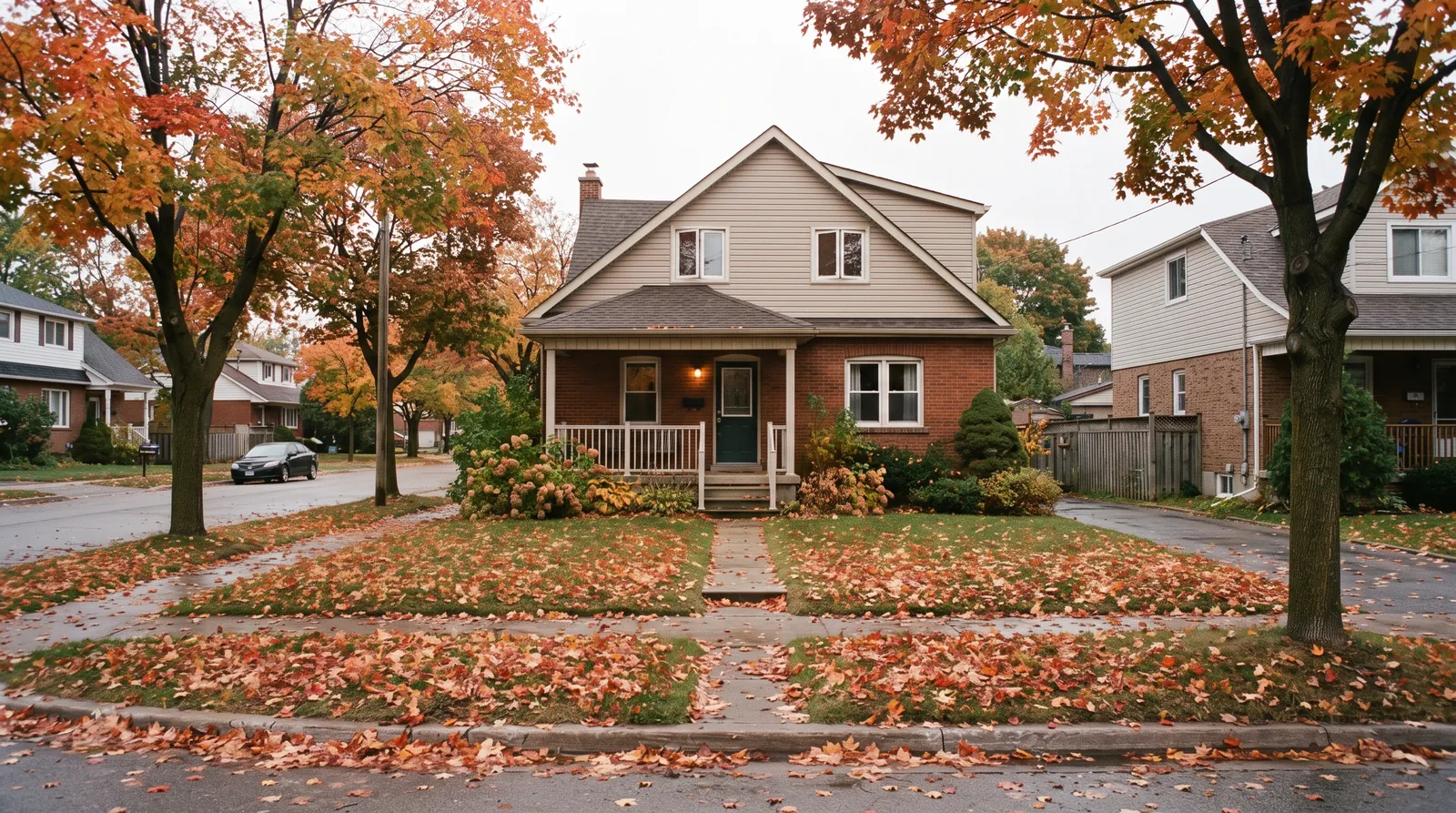
The mortgage is gone. That fact tends to end the conversation about whether to stay in the house, because a paid-off home feels like free accommodation. It is not free, and the gap between “no mortgage” and “no cost” is large enough that it deserves a proper accounting rather than an assumption.
What follows is a framework, not a recommendation. The right answer is specific to a house, a town, a household and a state of health, and none of those can be read off a page.
Paid off is not free
A mortgage payment is only one of the costs of owning a house, and it is the only one that ever ends. Property tax does not stop. Insurance does not stop. The roof continues to age on exactly the same schedule it was on before the last payment was made.
What changes at the end of a mortgage is that the costs become invisible. They stop being one predictable monthly debit and become a scatter of annual bills and occasional large repairs, which is much harder to perceive as a running cost — and much easier to under-budget for.
What carrying a house actually costs
Five categories cover nearly all of it. Illustrative annual figures for a mortgage-free house, chosen to be plausible rather than to describe anyone’s actual home:
| Cost | Illustrative annual |
|---|---|
| Property tax | $4,200 |
| Home insurance | $1,500 |
| Heating, water, electricity | $3,000 |
| Maintenance reserve, at 1% of value | $6,000 |
| Snow, lawn, gutters, small repairs | $1,800 |
| Total | $16,500 |
That is $1,375 a month for a house with no mortgage on it. The line most often left out is the maintenance reserve — the roof, the furnace, the windows, the driveway — because in any given year it may well be zero. Over twenty years it is not zero, and a commonly used rule of thumb is around one per cent of the property’s value a year.
The equity question
There is a second cost, and it does not appear on any bill. A $600,000 house represents $600,000 that is not available for anything else — not for income, not for care, not for spending.
That is not automatically a problem. Housing equity is doing a real job: it is providing somewhere to live, and it may be appreciating. But it is worth naming, because it is the difference between a household that is asset-rich and income-constrained and one that is merely income-constrained. A household feeling squeezed by a two per cent indexation increase while sitting on substantial housing equity is in a specific and fairly common position, and it has options that a household without the equity does not.
Several mechanisms exist for accessing some of that value without moving — borrowing against the home, provincial property-tax deferral programmes for older owners, and products marketed specifically at this situation. They differ greatly in cost and consequence, several are expensive, and the choice between them is genuinely one for independent professional advice rather than an article. We do not recommend any particular product or provider.
What moving costs
The comparison is often made as though selling were free. It is not, and the one-off costs are substantial enough to change the arithmetic for several years:
- Agent commission — on a $600,000 sale, five per cent is $30,000.
- Legal fees and disbursements on the sale, and again on a purchase.
- Land transfer tax if buying again, which in some provinces and cities is a very large number.
- The move itself — movers, storage, disposal of forty years of accumulation.
- Fitting out the new place, which is reliably underestimated.
A realistic one-off total in the tens of thousands means that moving to save a few hundred dollars a month takes years simply to break even on the transaction.
An illustrative comparison
Set the same household against renting a two-bedroom apartment:
| Staying | Renting | |
|---|---|---|
| Housing payment | — | $22,800 |
| Property tax | $4,200 | — |
| Insurance | $1,500 | $300 |
| Utilities | $3,000 | $1,200 |
| Maintenance and upkeep | $7,800 | — |
| Annual total | $16,500 | $24,300 |
On these figures staying is about $7,800 a year cheaper in cash terms. But the renting column comes with $600,000 released from the house, and the staying column comes with that sum locked up. Which side wins depends entirely on what the released capital would do, what rents do over twenty years, and how long the household expects to need the arrangement — three things nobody knows in advance.
That is the honest conclusion, and it is why the cash comparison alone never settles the question.
The costs that only arrive later
Two more items belong in a twenty-year view and are routinely left out:
Adaptation. A house that works at 68 may not at 82. Stairs, bathrooms and door widths become the issue. Some of that work carries a tax credit — see the renovation credit many Canadians over 65 never claim — but the credit covers a fraction of the expense, not the expense.
Services bought in. Tasks done personally at 65 get contracted out at 80. Snow clearing, lawns, gutters, cleaning and small repairs are a line that grows with age even when nothing about the house changes.
What the numbers cannot settle
Having set out the arithmetic, it is worth being clear about its limits. The things that most often decide this question are not financial:
- Distance to family, and to the people who would help in a difficult week.
- Distance to a hospital, a pharmacy, a bus route.
- Whether the house is where a life happened.
- Whether one person wants to move and the other does not.
A financially optimal move that leaves someone isolated is not a good decision. The value of the arithmetic is that it tells you what the non-financial choice actually costs, so you can make it deliberately instead of by default.
Doing your own version
Four numbers, and you can build the whole comparison:
- Last year’s actual costs — the tax bill, the insurance renewal, twelve months of utilities. Actual figures, not estimates.
- A maintenance reserve. Either one per cent of the property’s value, or your own average over the last ten years if you have the records.
- What the house would realistically sell for, less the transaction costs above.
- What the alternative actually costs — a real rent for a real apartment in the area you would actually move to.
An afternoon with those four figures produces a far better conversation than years of assuming that a paid-off house is free.
One email a month: what changed in Canadian pensions and taxes, and what it means in dollars. Free.
Official sources
- Canada Revenue Agency — Home accessibility expenses (line 31285) — the credit available on qualifying accessibility renovations
- Canada Mortgage and Housing Corporation — housing market data and research — published rental and housing market data by region
- Financial Consumer Agency of Canada — impartial federal guidance on home equity borrowing and related products
Candy On Bone is published by SPV Consulting Estonia OÜ and provides general information about Canadian public pensions and taxes. It is not a Government of Canada, Service Canada or Canada Revenue Agency publication and has no affiliation with them. Nothing here is financial, tax or legal advice, and no figure in this article is a promise, quotation or entitlement for any individual reader. Benefit amounts and tax rules depend on personal circumstances and change over time; the figures cited were taken from the official sources listed above on . There is no application, registration or fee on this website for any government benefit. Never give your Social Insurance Number, banking details or government account credentials to a website in response to an article. Use My Service Canada Account or contact Service Canada for anything concerning your own payments.